Name, Address, Selfie: The Verification Traps Korean-Speaking US Players Meet in 2026
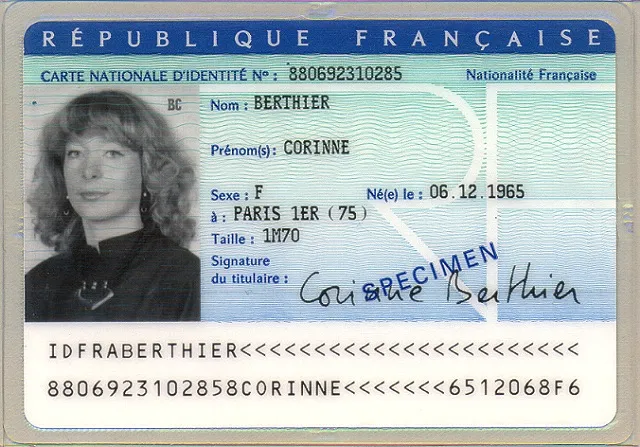
Photo: French government, Public domain, via Wikimedia Commons
Identity verification is the point where a casino account stops being a login and becomes a financial relationship. For Korean-speaking players in the United States, that moment carries a distinct set of risks. In 2026, the problem is rarely that a player has something to hide. More often, the failure comes from name-order conventions, address formatting, selfie checks, VPN flags, and support desks that advertise Korean-language service but cannot resolve a Korean-language KYC case.
Why the KYC gap persists
Korean names do not always map cleanly onto US identity documents. A player may hold a state ID that displays a family name and a given name in separate fields, while a Korean passport or family record presents the surname first. Romanization adds another layer: Kim Minji, Minji Kim, KIM MIN-JI, and Min-Ji Kim can all refer to the same person. A casino database may treat each variation as a different identity.
Address records create similar friction. US addresses often include apartment numbers, ZIP+4 codes, and state abbreviations that billing systems normalize differently. A bank statement may show a mailing address while a utility bill shows a service address. A casino may accept one and reject the other without explaining why.
Language support is part of the gap, but it is not the whole gap. A Korean-language landing page does not guarantee that the KYC team can review a Korean-language document or explain a rejection in Korean. Verification is an operational process, and players should judge it by documented requirements rather than marketing claims.
Five friction points to expect
1. Legal-name order
Ask the casino which field is the surname and which is the given name in its system. Do not assume that the order on your US driver's license will match the order on your casino profile. If your given name is hyphenated, confirm whether the hyphen should be included or omitted.
2. Address-document mismatch
A casino may require a utility bill or bank statement dated within a recent window. Confirm the accepted date range, the accepted document types, and whether the address must match the casino profile exactly. A ZIP+4 mismatch should not be treated as a minor detail if the system performs an exact match.
3. Selfie and liveness checks
Automated selfie checks can fail because of lighting, glasses, camera angle, or a name mismatch rather than fraud. Ask which vendor performs the check and what happens if it fails. If you use a VPN for everyday privacy, disable it during verification. A VPN can create a geolocation mismatch that triggers manual review even when your documents are valid.
4. Language-barrier support
Ask whether a Korean-speaking agent can handle a KYC review, not just general chat. If the first-line support team cannot answer document questions, ask for the compliance or verification escalation path in writing.
5. Payment-name mismatch
Casino accounts should be funded from accounts in the player's own name. A card, bank account, or payment app under a different name can trigger a review that is difficult to reverse. Confirm the accepted payment methods and the name that must appear on the funding source.
The 2026 pre-deposit checklist
- Confirm the exact legal name, surname field, and given-name field that the casino will use.
- Use one residential address across the casino profile, payment method, and proof-of-address document.
- Ask which documents are accepted for US players and what date range is required.
- Confirm whether a state ID, driver's license, passport, utility bill, or bank statement is accepted.
- Ask whether a Korean-speaking agent can review the case.
- Disable any VPN before starting verification and keep it off until review is complete.
- Prepare clear, color scans or photos of the front and back of the chosen ID.
- Confirm how long documents are retained and how to request deletion after verification.
- Save screenshots of the stated requirements, support replies, and submission timestamps.
Questions to ask before uploading
- Which document types do you accept from US players, and which ones do you reject?
- In your system, which field is the surname and which is the given name?
- Will you accept a hyphenated given name, and should the hyphen appear on the document?
- What date range is required for proof of address, and must the address match exactly?
- Which liveness or selfie vendor do you use, and what is the manual-review process if it fails?
- If I use a VPN for privacy, will that cause a verification failure?
- Can a Korean-speaking compliance agent review my documents?
- How long are identity documents retained, and how do I request deletion?
- What is the escalation path if my KYC case is rejected?
Red flags at the document stage
Be cautious if a casino cannot state its document requirements before deposit, if support answers KYC questions only after money is sent, or if a representative asks for documents through a personal messaging account rather than a verified support channel. A legitimate verification process should be predictable. It may be strict, but it should be explainable.
Bottom line
Korean-speaking US players do not need to guess their way through KYC. They need to treat verification as a pre-deposit task, confirm name and address formatting in advance, and keep a written record of what the casino required. The safest account is the one whose verification rules are clear before any sensitive document is uploaded.